Research
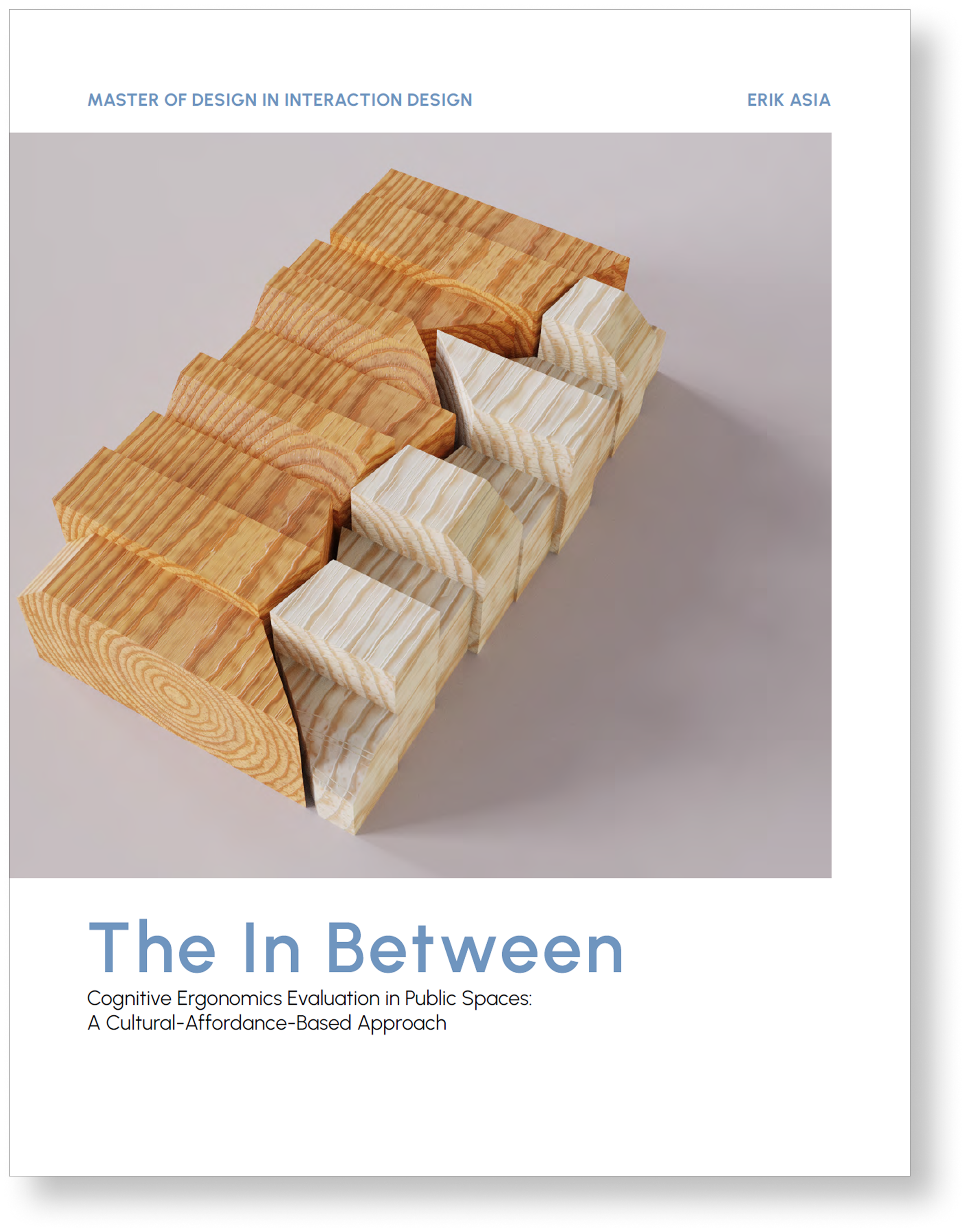
Erik’s research revolves around three key areas: affordance-based design, discursive design and design education, specifically the creation and use of tools that foster experiential and tangible learning outcomes, grounded in embodied cognition principles. His previous research on a cultural-affordance-based design framework highlights a concern with the disparity between intended object affordances and actual user experiences in public spaces, indicating a focus on making design more cognitively ergonomic and culturally sensible. This was explored through an ongoing discursive design practice as he creates design artefacts that generate dialogue and challenge assumptions through interactive elements and bodily experiences as approaches to meaning making. Through his research, Erik seeks to develop a conscious awareness of our physical interactions and engagements with the world, highlight designed objects as cultural and social artefacts for discourse, and create tangible learning tools through digital fabrication that emphasizes embodied cognition principles in design pedagogy.